-
Shop
- Advanced Technologies
- AI Skills
- Apple Accessories
- Arts, Crafts & Hobbies
- Bathroom
- Beauty
- Best-Sellers
- Car Accessories
- Car Buying & Ownership
- Confidence
- Dating & Social Skills
- Digital Resources
- Education & Learning
- Family & Parenting
- Fashion
- Alexander McQueen
- Bags & Wallets
- Balenciaga
- Belts
- Blazers
- Bottega Veneta
- Bottoms
- Brunello Cucinelli
- Burberry
- Chanel
- Chloé
- Dior
- Dolce & Gabbana
- Dresses
- Etro
- Fendi
- Gucci
- Hats & Hair Accessories
- Hoodies & Sweatshirts
- Jacquemus
- Jewelry
- Jil Sander
- Jimmy Choo
- Kiton
- Luggage
- Men's Fashion
- Miu Miu
- Off-White
- Outerwear
- Prada
- Rick Owens
- Saint Laurent
- Scarves
- Shoe Accessories
- Shoes
- Skirts
- Socks & Tights
- Sunglasses
- Sweaters & Cardigans
- The Row
- Tom Ford
- Tops & Shirts
- Valentino
- Valentino Garavani
- Versace
- Vivienne Westwood
- Watches
- Fashion Accessories
- Furniture
- Gadgets
- Gift Ideas
- Gifts
- Health & Beauty
- Health & Wellness
- Home & Garden
- Home & Kitchen
- Home Electronics
- Home Styling & Organization
- Home Supplies
- Kids & Babies
- Kids & Babies
- Kitchen
- Lighting
- Nike
- Parenting & Child Development
- Patio, Lawn & Garden
- Personal Growth
- Personal Style & Fashion
- Pet Care
- Pet Lifestyle & Wellness
- Pet Supplies
- Pets
- Sport & Outdoors
- Super Deals
- Travel
- Travel & Adventure
- Wealth
- Wellness
- Popular
- Best deals
Ask for Help Clearly: A Favor-Getting Checklist
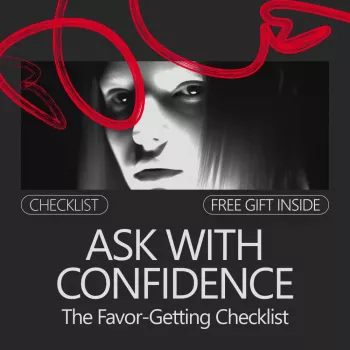
Ask with Confidence: The Favor-Getting Checklist for Clear, Comfortable Help Requests
Asking for help can feel awkward—even when the request is completely reasonable. The discomfort usually comes from uncertainty: What exactly should be asked? How much is too much? What if they feel cornered? A simple checklist reduces that tension by clarifying what you need, why it matters, and how to make it easy for the other person to say yes (or no) without straining the relationship. Below is a practical, repeatable approach to requesting favors with clarity, respect, and better follow-through.
What makes a request feel easy to accept
Most people don’t mind helping; they mind unclear, open-ended, or emotionally loaded asks. The goal is to make your request feel safe, bounded, and genuinely optional.
- Specificity beats pressure: A clear ask (“Can you review this paragraph?”) feels calmer than a vague “Can you help?” because it removes guesswork.
- Lower effort, higher yes-rate: Reduce steps, time, and decision fatigue. When the path is simple, helping feels doable.
- Respect autonomy: People relax when declining is explicitly acceptable. Trust grows when “no” doesn’t trigger consequences.
- Credibility signals: Preparation, good timing, and realistic expectations communicate respect for the other person’s time.
- Reciprocity without debt: Gratitude and follow-through matter more than grand “I owe you” promises. Reciprocity works best when it’s sincere and not transactional (see the APA’s overview of reciprocity).
The favor-getting checklist: prepare before asking
Before sending a text or tapping someone on the shoulder, take one minute to tighten the request. This is what turns “help me sometime” into “sure, I can do that.”
- Define the outcome in one sentence: What does “done” look like?
- Choose the right person: Match the favor to capability, bandwidth, and relationship context.
- Right-size the favor: Split large requests into smaller, time-boxed parts.
- Bring options: Offer two ways to help (a low-effort option and a more involved option).
- Set a clear deadline and time estimate: “10 minutes today” or “by Friday at noon.”
- Anticipate obstacles: Have links, files, names, addresses, and context ready so they can act immediately.
- Plan an easy exit: A simple “no worries if not possible” line removes pressure.
Pre-ask checklist: what to confirm in 60 seconds
| Checklist item | What it prevents | Quick example |
|---|---|---|
| Clear ask | Confusion and back-and-forth | “Can you review this 1-page summary and tell me what’s unclear?” |
| Effort estimate | Hidden time cost resentment | “It should take about 10–15 minutes.” |
| Deadline | Open-ended obligation | “Could you send feedback by Thursday 3 PM?” |
| Context | Misaligned expectations | “This is for a client update; tone should be concise.” |
| Opt-out line | Pressure and awkwardness | “If your week is packed, totally understand.” |
How to ask: simple structure that sounds natural
A good request doesn’t need a long preface. It needs a clean structure that protects the relationship and makes next steps obvious.
- Start with brief connection, then move quickly: One sentence is plenty (“Hope your week’s going okay.”).
- Use a 4-part format: context → specific ask → time/constraints → opt-out.
- Keep it to one screen (or one minute): If it takes longer to explain than to do, simplify the ask.
- Avoid guilt framing: Skip lines like “I hate to ask…” or “You’re the only one who can…”—they add pressure instead of clarity.
- Offer a next step: Propose a time, send the link, or suggest a quick call. HBR emphasizes that good help-asking is specific and actionable—especially at work (see Harvard Business Review for guidance on professional communication).
If the topic is sensitive, build trust by asking permission first (“Do you have 10 minutes for something quick?”). Trust is easier to maintain when the other person can choose freely (a core feature of trust discussed broadly in philosophy—see the Stanford Encyclopedia of Philosophy).
Ready-to-use scripts for common situations
Use these as templates and adjust the details (time, deadline, and links) so the request stays concrete.
Match the message to the channel
| Channel | Best for | Tip to increase clarity |
|---|---|---|
| Text/DM | Small, time-boxed favors | Put the ask in the first two lines. |
| Requests needing detail or links | Use a short bullet list of what’s needed. | |
| Phone call | Nuanced or emotional topics | Ask permission first: “Is now a bad time?” |
| In person | High-trust conversations | State a clear time estimate and an easy opt-out. |
Timing, boundaries, and the art of a graceful “no”
Follow-through that makes future yeses more likely
A printable checklist to keep requests calm and clear
For a step-by-step, ready-to-use format, keep this resource handy: Ask with Confidence: The Favor-Getting Checklist – Master the Art of Asking for Help.
If a small thank-you gift fits the relationship, consider something thoughtful and specific—especially after a bigger favor. For example, a family-oriented gift can be a warm way to show appreciation without turning help into a transaction: Montessori 3D Shape Matching Puzzle. For a more personal “thank you” when appropriate, a higher-end gift can also be an option: Saint Laurent Black Low-Top Sneakers.
FAQ
How can a request sound confident without sounding demanding?
Use a specific ask, a realistic time estimate, and an explicit opt-out line. Confidence comes from clarity and respect, not from pressure or urgency.
What should be included in a favor request message?
Include brief context, the exact ask, how long it will take, a clear deadline, and any links or details needed to act right away. Keeping it short reduces back-and-forth and makes it easier to respond.
What if someone says no to a favor?
Thank them, stay warm, and don’t bargain or guilt-trip. If needed, ask a different person or offer a smaller alternative with a new time frame.
Recommended for you


Was this article helpful?
Yes
No








Leave a comment