-
Shop
- Advanced Technologies
- AI Skills
- Apple Accessories
- Arts, Crafts & Hobbies
- Bathroom
- Beauty
- Best-Sellers
- Car Accessories
- Car Buying & Ownership
- Confidence
- Dating & Social Skills
- Digital Resources
- Education & Learning
- Family & Parenting
- Fashion
- Alexander McQueen
- Bags & Wallets
- Balenciaga
- Belts
- Blazers
- Bottega Veneta
- Bottoms
- Brunello Cucinelli
- Burberry
- Chanel
- Chloé
- Dior
- Dolce & Gabbana
- Dresses
- Etro
- Fendi
- Gucci
- Hats & Hair Accessories
- Hoodies & Sweatshirts
- Jacquemus
- Jewelry
- Jil Sander
- Jimmy Choo
- Kiton
- Luggage
- Men's Fashion
- Miu Miu
- Off-White
- Outerwear
- Prada
- Rick Owens
- Saint Laurent
- Scarves
- Shoe Accessories
- Shoes
- Skirts
- Socks & Tights
- Sunglasses
- Sweaters & Cardigans
- The Row
- Tom Ford
- Tops & Shirts
- Valentino
- Valentino Garavani
- Versace
- Vivienne Westwood
- Watches
- Fashion Accessories
- Furniture
- Gadgets
- Gift Ideas
- Gifts
- Health & Beauty
- Health & Wellness
- Home & Garden
- Home & Kitchen
- Home Electronics
- Home Styling & Organization
- Home Supplies
- Kids & Babies
- Kids & Babies
- Kitchen
- Lighting
- Nike
- Parenting & Child Development
- Patio, Lawn & Garden
- Personal Growth
- Personal Style & Fashion
- Pet Care
- Pet Lifestyle & Wellness
- Pet Supplies
- Pets
- Sport & Outdoors
- Super Deals
- Travel
- Travel & Adventure
- Wealth
- Wellness
- Popular
- Best deals
Best Smart Air Purifiers for 3,500+ Sq Ft Spaces
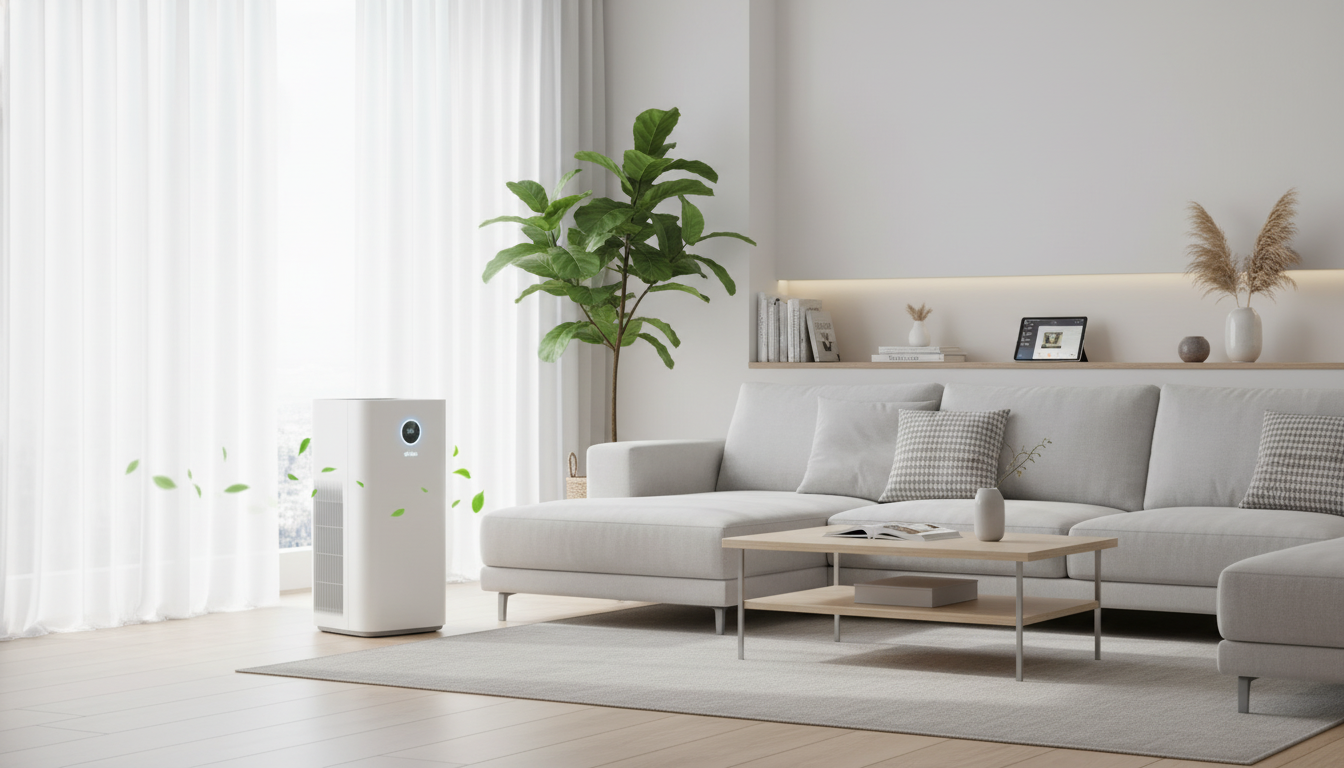
Smart Air Purifiers for Large Rooms: What Matters When Coverage Reaches 3,500+ sq. ft.
Large open layouts, high ceilings, and multi-room living spaces need more than a basic purifier. The right smart model balances room coverage, effective filtration, sensor-driven automation, and practical upkeep—without turning the space into a noisy wind tunnel.
Start With Real-World Room Coverage
For extra-large spaces, the coverage number on the box is only the starting point. What matters is how the purifier performs in the way the space is actually used.
- Size for the full open area: Include hallways, connected rooms, and open stairwells if doors are usually open.
- Account for ceiling height: Loft ceilings and tall great rooms dilute clean air and demand stronger airflow. In these cases, performance metrics (like CADR and ACH) often tell a truer story than a single square-foot rating.
- Think in “zones,” not rooms: If air moves freely between spaces, the purifier is effectively cleaning one big zone.
Key Performance Metrics: CADR and Air Changes per Hour
Two numbers help predict whether a purifier can keep up with a big footprint: CADR and ACH. These are especially useful when comparing models that all claim “whole home” or “extra-large room” coverage.
- CADR (Clean Air Delivery Rate): Indicates how quickly a unit removes smoke, dust, and pollen in standardized testing. If possible, prioritize ratings tied to independent programs such as AHAM guidance on CADR (AHAM).
- ACH (Air Changes per Hour): Estimates how many times the purifier can filter the room’s air each hour. Higher ACH is typically better for allergies, pets, and smoke events, while moderate ACH can be fine for everyday freshness.
- Usable fan range: In a large room, it helps to have a quiet baseline speed that can run for hours, plus higher speeds that quickly respond to cooking, cleaning, or wildfire smoke.
| Metric | Why it matters in large rooms | What to look for |
|---|---|---|
| Coverage rating (sq. ft.) | Indicates intended maximum area under specific assumptions | A rating that meets or exceeds the full open area (including connected spaces) |
| CADR (smoke/dust/pollen) | Faster particle removal and better responsiveness to spikes | Higher CADR is preferable; verify it’s independently tested when possible |
| ACH estimate | Helps gauge cleaning frequency for the whole space | Aim higher for smoke/pets/allergies; moderate can be fine for general freshness |
| Fan speed range | Controls noise and energy use across daily conditions | Multiple speeds plus an auto mode tied to sensors |
Filtration Stack: What Each Layer Actually Does
In a big room, the filter system needs to handle both high volumes of air and real-life mess—pet hair, tracked-in dust, and the occasional smoky cooking session.
- Pre-filter: Captures larger particles like hair and lint. This is a big deal for pet owners because it helps the main filter last longer.
- HEPA-class filtration: Targets fine particulate pollution such as dust, pollen, and many smoke particles. For households managing allergies, this layer is often the “core” of the system.
- Activated carbon (or similar adsorbent): Helps reduce odors and some gases/VOCs. Carbon capacity (how much carbon and how it’s used) matters more than flashy odor claims.
- Be cautious with ionizers: If a unit includes an ionizer, look for clear “optional/off” control and credible low-ozone certifications. For general guidance on home air cleaners and filtration, see the U.S. EPA’s overview.
Smart Features That Are Worth Paying For
Placement for Large Rooms: Make Airflow Work
Noise and Energy: Comfort Makes Consistency Possible
- Prioritize a quiet low setting: Continuous low-to-medium operation is often more effective than occasional high-speed bursts.
- Let sensors do the noisy work: Auto mode can keep day-to-day sound levels down and only ramp up when particles spike.
- Check efficiency signals: If power draw details or efficiency certifications are available, they’re worth comparing for big spaces and long seasons of use. (Broader health context on household air pollution is also covered by the World Health Organization.)
Maintenance Planning: Filters, Costs, and Availability
Featured Options for Extra-Large Coverage (and a Complementary Pick)
| Product | Coverage rating | Best for | Link |
|---|---|---|---|
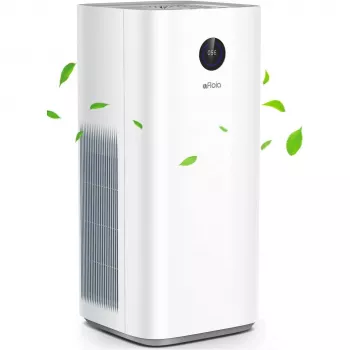
| Smart Air Purifier for Large Rooms up to 3576 sq. ft | Up to 3576 sq. ft | Open layouts and extra-large rooms needing smart automation | View product |
Smart Air Purifier for Large Rooms up to 3576 sq. ft is a strong fit for open-concept living areas, large basements, studio-style layouts, and multi-zone spaces where one unit needs to move substantial air and adjust automatically as conditions change.
After air quality is handled, some households also like to be more intentional about home fragrance. For a quick, beginner-friendly guide to how different scent profiles work, consider A Guide to Understanding Scent Notes – Beginner-Friendly Fragrance Ebook.
FAQ
Is one purifier enough for a large open-concept space?
Often, yes—if the purifier has the airflow to match the full connected area and you place it where air can circulate well. If the space has tall ceilings, long hallways, or “dead zones” where air doesn’t mix, two units placed strategically can provide more even results.
Do smart air purifiers help with odors and smoke?
They can help with both, but through different mechanisms: HEPA-style filtration targets smoke particles, while activated carbon helps with odors and some gases. Smart sensors can trigger higher fan speeds during smoke or cooking events, but odor control depends heavily on carbon capacity and ventilation.
How often should filters be replaced in a large room purifier?
A practical range is every 6–12 months for the main filter in many homes, with pre-filters cleaned more frequently. Pets, wildfire smoke, heavy cooking, and dust can shorten that timeline, so follow the unit’s filter indicator and pay attention to reduced airflow or lingering odors.
Recommended for you


Was this article helpful?
Yes
No






Leave a comment