-
Shop
- Advanced Technologies
- AI Skills
- Apple Accessories
- Arts, Crafts & Hobbies
- Bathroom
- Beauty
- Best-Sellers
- Car Accessories
- Car Buying & Ownership
- Confidence
- Dating & Social Skills
- Digital Resources
- Education & Learning
- Family & Parenting
- Fashion
- Alexander McQueen
- Bags & Wallets
- Balenciaga
- Belts
- Blazers
- Bottega Veneta
- Bottoms
- Brunello Cucinelli
- Burberry
- Chanel
- Chloé
- Dior
- Dolce & Gabbana
- Dresses
- Etro
- Fendi
- Gucci
- Hats & Hair Accessories
- Hoodies & Sweatshirts
- Jacquemus
- Jewelry
- Jil Sander
- Jimmy Choo
- Kiton
- Luggage
- Men's Fashion
- Miu Miu
- Off-White
- Outerwear
- Prada
- Rick Owens
- Saint Laurent
- Scarves
- Shoe Accessories
- Shoes
- Skirts
- Socks & Tights
- Sunglasses
- Sweaters & Cardigans
- The Row
- Tom Ford
- Tops & Shirts
- Valentino
- Valentino Garavani
- Versace
- Vivienne Westwood
- Watches
- Fashion Accessories
- Furniture
- Gadgets
- Gift Ideas
- Gifts
- Health & Beauty
- Health & Wellness
- Home & Garden
- Home & Kitchen
- Home Electronics
- Home Styling & Organization
- Home Supplies
- Kids & Babies
- Kids & Babies
- Kitchen
- Lighting
- Nike
- Parenting & Child Development
- Patio, Lawn & Garden
- Personal Growth
- Personal Style & Fashion
- Pet Care
- Pet Lifestyle & Wellness
- Pet Supplies
- Pets
- Sport & Outdoors
- Super Deals
- Travel
- Travel & Adventure
- Wealth
- Wellness
- Popular
- Best deals
Dog Losing Fur in Patches: Causes, Checks & Vet Signs
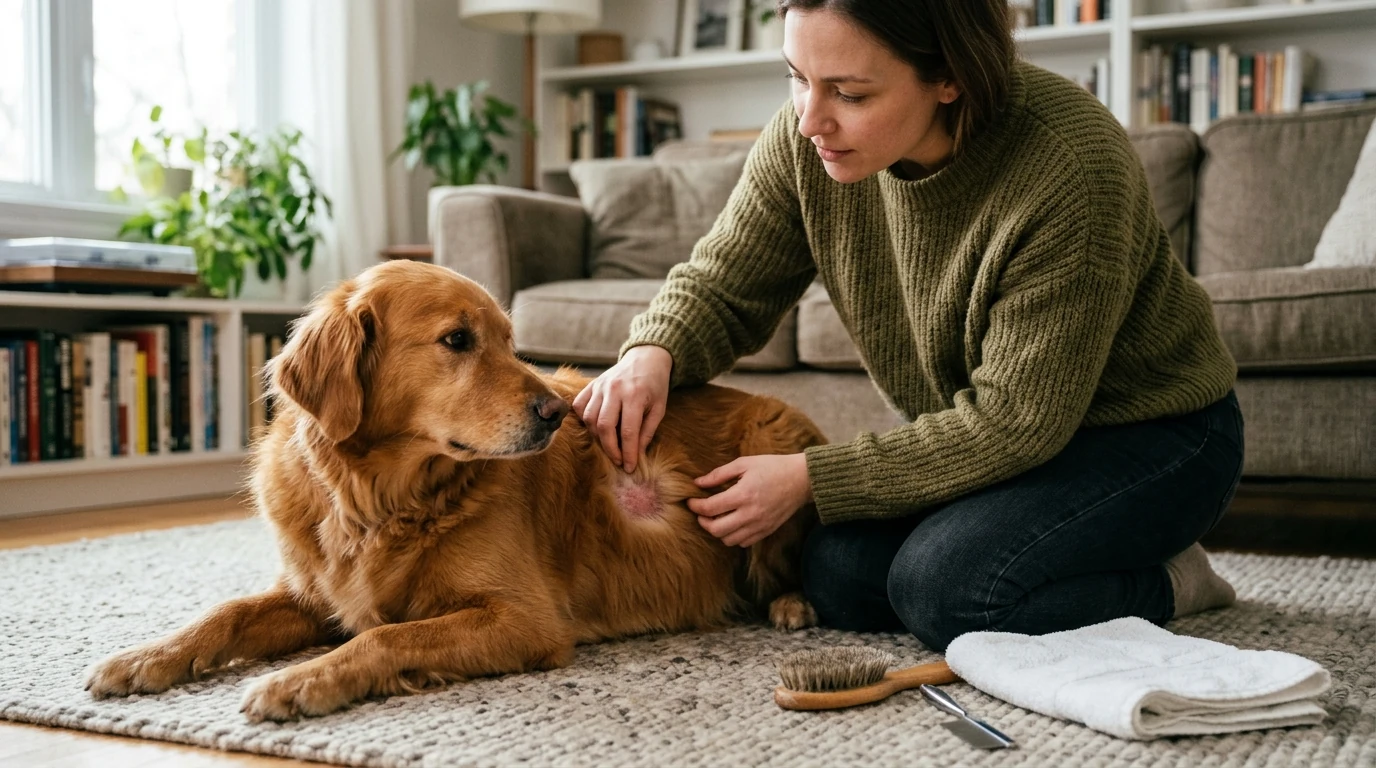
Understanding Why Dogs Lose Fur – A Practical Guide to Dog Losing Fur in Patches Causes for Caring Pet Owners
Patchy hair loss can look sudden and alarming, but it often follows recognizable patterns tied to skin health, parasites, allergies, hormones, stress, or grooming habits. The most helpful first step is noticing what the bald spots look like (itchy vs. not itchy, red vs. normal skin, scaly vs. smooth), what else has changed (diet, season, new shampoos, fleas, stress), and when to involve a veterinarian. This guide breaks down common reasons dogs lose fur in patches, what can be done safely at home, and which warning signs mean it’s time for prompt medical care. For more guidance, see Hair Loss in Pets: Common Causes and When to Worry. For further reading, see Why Is Your Pet Losing Hair? Causes & Solutions for Dogs ….
First: What “patchy hair loss” can look like
- Small circular bald spots with broken hairs, crusting, or scaling (often linked to infection such as ringworm, mites, or bacterial folliculitis).
- Symmetrical thinning on both sides of the body with little itching (can point toward hormonal conditions such as hypothyroidism or Cushing’s).
- Hair loss on the rump/tail base with intense itching and chewing (commonly flea allergy dermatitis; also other allergies).
- Hair loss with darkened skin, thickening, or odor (can indicate chronic inflammation, yeast overgrowth, or endocrine disease).
- Patchy loss after heavy grooming, clipping, or friction from harnesses/collars (coat damage, clipper-related coat issues, pressure/friction alopecia).
- Sudden patches with raw, moist skin (hot spots/acute moist dermatitis; often triggered by allergy, fleas, or trapped moisture).
Common causes of fur loss in patches
- Parasites: Fleas can trigger intense itch and self-trauma; mites (demodex, sarcoptes) can cause patchy loss with redness, scaling, or severe itch depending on the mite type.
- Allergies: Environmental (pollen, dust mites, molds), food-related, and flea allergy can all drive itching, chewing, recurrent ear infections, and secondary skin infections that worsen hair loss.
- Fungal infection: Ringworm can cause circular patches with scaling/crusting; it’s contagious to other pets and people, so household hygiene matters (see the CDC ringworm overview).
- Bacterial/yeast infections: Often secondary to allergy or moisture; look for odor, greasy coat, redness, pimples, or thickened skin.
- Hormonal/endocrine issues: Hypothyroidism and Cushing’s disease may cause thinning, slow regrowth, and skin changes; itch may be mild unless infection is present (general background: Merck Veterinary Manual).
- Stress and compulsive licking: Anxiety, boredom, or pain can lead to repeated licking (lick granulomas) and localized hair loss.
- Pain or orthopedic issues: Dogs may lick the painful area (hips, knees, paws), creating a patch without obvious skin disease at first.
- Nutritional imbalance: Poor-quality diet, inadequate essential fatty acids, or malabsorption can contribute to dull coat and shedding; true patchy loss often has an additional skin trigger.
- Seasonal shedding vs. abnormal loss: Heavy shedding can be normal, but discrete bald patches, sores, or scaling are not typical and deserve closer evaluation.
Quick at-home checks that help pinpoint the cause
- Check the itch level: Frequent scratching, chewing paws, rubbing face, or scooting can suggest allergy or parasites.
- Inspect skin and hair closely: Note redness, scabs, dandruff, greasy feel, blackheads, or a strong odor—these clues often indicate infection or yeast.
- Look in common flea zones: Tail base, belly, and inner thighs; use a flea comb and look for “flea dirt” (dark specks that turn reddish when wet). Cornell has a practical flea-control overview that helps explain why consistency matters: Cornell University.
- Map the pattern: Take photos every 3–7 days to track spread, regrowth, or new lesions; patterns are useful for the veterinary exam.
- Review recent changes: New treats/food, boarding/daycare, grooming products, new bedding, yard treatments, or a new harness can correlate with onset.
- Assess contagion risk: If circular lesions appear or other pets/humans develop itchy rashes, ringworm becomes more likely and warrants prompt veterinary testing.
- Avoid home “experiments” that irritate: Human anti-itch creams, essential oils, and harsh disinfectants can worsen inflammation or be toxic if licked.
When to see a veterinarian urgently
What the veterinary workup may include (and why it matters)
Safe supportive care at home while awaiting answers
Patchy Fur Loss Clues and What They Often Suggest
| Clue | Common possibilities | Helpful next step |
|---|---|---|
| Intense itching + tail-base hair loss | Fleas, flea allergy, environmental allergy | Flea comb check; start/confirm consistent flea prevention; vet visit if sores or no improvement |
| Circular patches with scaling/crust | Ringworm, mites, bacterial folliculitis | Limit contact with other pets/people until checked; vet testing (culture/PCR, scraping) |
| Greasy coat + odor + redness | Yeast overgrowth, bacterial infection | Vet cytology; medicated shampoo may be prescribed |
| Symmetrical thinning with little itch | Hypothyroidism, Cushing’s, other endocrine causes | Schedule vet exam and bloodwork/hormone testing |
| Moist, raw “hot spot” patch | Acute moist dermatitis from itch + trapped moisture | Prevent licking; seek vet care promptly to control infection and pain |
Helping fur grow back and preventing recurrence
Featured Products
- Understanding Why Dogs Lose Fur – A Practical Guide to Dog Losing Fur in Patches Causes for Caring Pet Owners
- New Balance 1906R Light Blue Leather Sneakers
- Calvin Klein Women’s Spring/Summer Backpack
FAQ
Can stress cause a dog to lose fur in patches?
Yes. Stress, boredom, or anxiety can trigger repetitive licking or chewing that creates localized bald areas; parasites, itch, and pain should be ruled out first because they commonly drive the behavior.
Is patchy hair loss contagious to people or other pets?
Some causes are contagious, especially ringworm and certain mites. If you see circular scaly patches, new lesions in multiple pets, or itchy rashes in people, limit close contact and arrange veterinary testing promptly.
How long does it take for fur to grow back after treating the cause?
Hair regrowth commonly takes several weeks to a few months, depending on coat type and whether the skin remains inflamed. Regrowth is usually slower when allergies or secondary infections are still active.
Recommended for you



Was this article helpful?
Yes
No









Leave a comment