-
Shop
- Advanced Technologies
- AI Skills
- Apple Accessories
- Arts, Crafts & Hobbies
- Bathroom
- Beauty
- Best-Sellers
- Car Accessories
- Car Buying & Ownership
- Confidence
- Dating & Social Skills
- Digital Resources
- Education & Learning
- Family & Parenting
- Fashion
- Alexander McQueen
- Bags & Wallets
- Balenciaga
- Belts
- Blazers
- Bottega Veneta
- Bottoms
- Brunello Cucinelli
- Burberry
- Chanel
- Chloé
- Dior
- Dolce & Gabbana
- Dresses
- Etro
- Fendi
- Gucci
- Hats & Hair Accessories
- Hoodies & Sweatshirts
- Jacquemus
- Jewelry
- Jil Sander
- Jimmy Choo
- Kiton
- Luggage
- Men's Fashion
- Miu Miu
- Off-White
- Outerwear
- Prada
- Rick Owens
- Saint Laurent
- Scarves
- Shoe Accessories
- Shoes
- Skirts
- Socks & Tights
- Sunglasses
- Sweaters & Cardigans
- The Row
- Tom Ford
- Tops & Shirts
- Valentino
- Valentino Garavani
- Versace
- Vivienne Westwood
- Watches
- Fashion Accessories
- Furniture
- Gadgets
- Gift Ideas
- Gifts
- Health & Beauty
- Health & Wellness
- Home & Garden
- Home & Kitchen
- Home Electronics
- Home Styling & Organization
- Home Supplies
- Kids & Babies
- Kids & Babies
- Kitchen
- Lighting
- Nike
- Parenting & Child Development
- Patio, Lawn & Garden
- Personal Growth
- Personal Style & Fashion
- Pet Care
- Pet Lifestyle & Wellness
- Pet Supplies
- Pets
- Sport & Outdoors
- Super Deals
- Travel
- Travel & Adventure
- Wealth
- Wellness
- Popular
- Best deals
V Portable Car Air Compressor: Fast 12V Tire Top-Ups
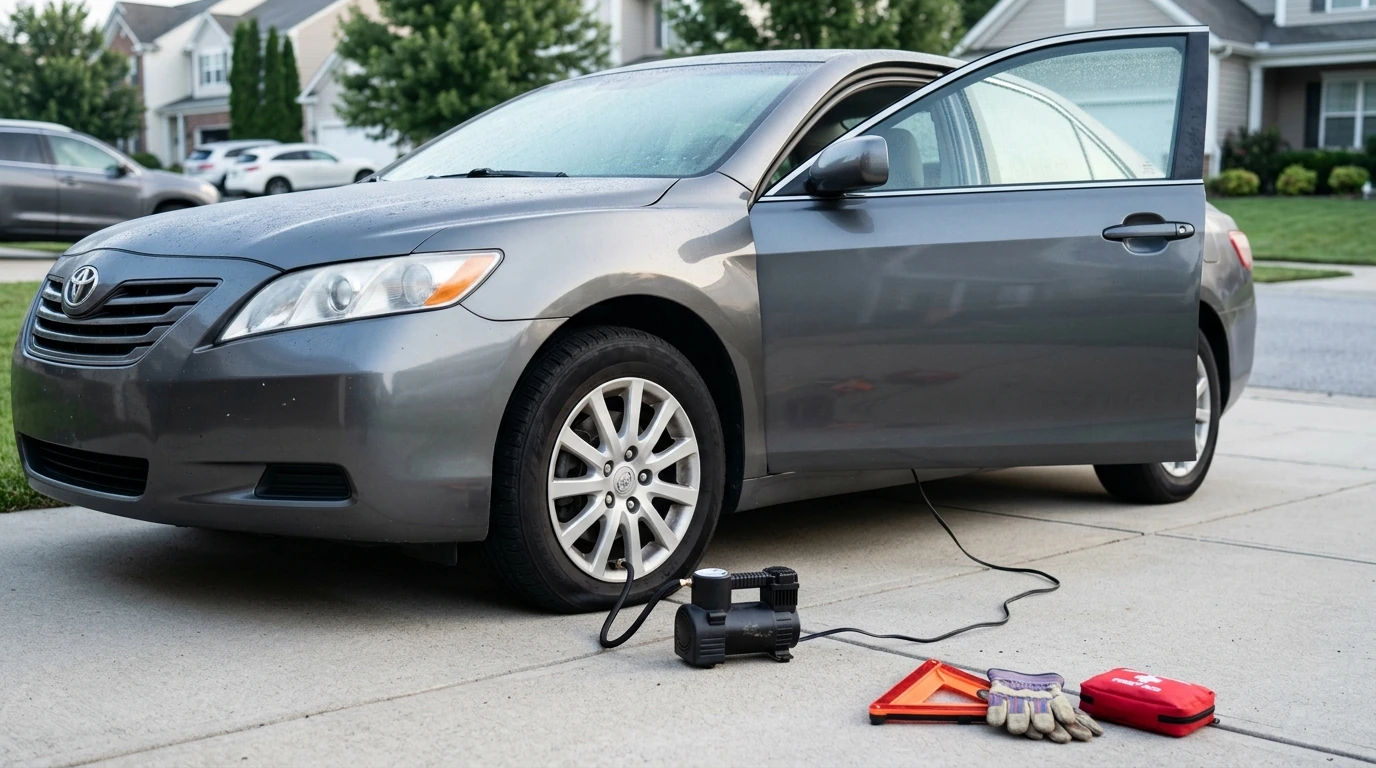
V Portable Car Air Compressor: Quick Tire Top-Ups Anywhere
A compact 12V air compressor can turn a slow leak or low-pressure warning into a quick pit stop rather than a roadside headache. Having a small inflator in the trunk helps keep tires closer to the vehicle’s recommended PSI, which supports predictable handling, steadier braking, and better day-to-day efficiency. This guide covers what matters for everyday drivers—power, speed, accuracy, and safe use—plus a clear look at the 12V Mini Portable Car Air Compressor and when it’s the right fit.
When a portable compressor is most useful
Most drivers don’t need a shop-grade inflator—they need something that quickly corrects small pressure drops without forcing a detour. A 12V portable compressor shines in common, real-world situations:
- Fixing gradual pressure loss before it becomes a flat tire (and before the tire wears unevenly).
- Seasonal temperature swings that drop tire pressure overnight, especially during cold snaps.
- Topping up spares, trailer tires, and small inflatables when compatible with the included adapters.
- Reducing reliance on gas-station pumps with broken gauges, slow lines, or missing nozzle parts.
- Keeping a simple emergency kit option in the glove box or trunk for quick corrections.
For broader tire safety guidance and maintenance basics, the NHTSA’s tire safety resources are a useful reference: NHTSA Tire Safety.
What to look for in a 12V portable car air compressor
Not every inflator feels the same in actual use. These are the practical checkpoints that matter when you’re parked in a driveway—or on the shoulder with traffic nearby.
Power source and reach
A true “car” compressor should plug into a 12V vehicle socket, and the cable/air hose should be long enough to reach every wheel without awkward stretching. If you constantly have to reposition the unit, it slows everything down and increases the chance of bending the valve stem.
Inflation speed (real-world)
For typical driving, the time to add 5–10 PSI matters more than a high advertised maximum pressure. A faster top-up reduces the time you’re exposed on the roadside and makes routine maintenance more likely to happen.
Gauge readability and accuracy
A clear readout helps you stop at the correct PSI instead of guessing. Even with a built-in gauge, it’s smart to verify occasionally with a separate handheld gauge so you learn how closely your inflator matches a known reference.
Duty cycle and heat management
Small compressors generate heat quickly, especially if you’re topping up multiple tires back-to-back. Look for guidance on cooldown breaks and keep vents unobstructed so the motor can shed heat.
Nozzle/adapter set and storage
Adapters can expand what you can inflate, but only if they stay organized. A pouch or built-in storage helps keep small parts from getting lost in a trunk.
Lighting and portability
A built-in LED is a practical feature for night use or bad weather. Also consider overall size and whether the compressor stores neatly with the cable—compact storage makes it more likely you’ll keep it in the vehicle year-round.
12V Mini Portable Car Air Compressor at a glance
The 12V Mini Portable Car Air Compressor is a compact, 12V option geared toward quick top-ups and convenient storage. It’s best used for routine maintenance—bringing tires back to the recommended PSI after a small drop—rather than trying to recover a severely underinflated tire from near-zero. For commuting, road-trips, or sudden temperature drops, it’s a practical backup at a price point that makes it easy to keep one in the car for occasional use.
Quick comparison checklist
| Feature | What to check | Why it matters |
|---|---|---|
| Power | 12V vehicle socket connection | Works anywhere the car can provide power |
| Reach | Cord/hoses reach all wheels | Prevents repositioning and awkward angles |
| Speed | Time to add 5–10 PSI | Faster top-ups reduce roadside exposure |
| Readability | Clear pressure readout | Helps stop at the right PSI |
| Heat management | Cooldown guidance and ventilation | Protects the motor during multi-tire use |
| Accessories | Adapters/storage pouch | Supports more use cases and reduces lost parts |
How to inflate a car tire safely (quick steps)
Getting reliable pressure readings
For fuel-economy context and why correct pressure matters, see the U.S. Department of Energy’s guidance: Maintaining Correct Tire Pressure.
Common mistakes to avoid
Who this compressor is best for
Optional add-ons to round out a simple car kit
- 12V Mini Portable Car Air Compressor (core tire top-up tool)
- Calvin Klein Women’s Spring/Summer Backpack (simple way to keep small car essentials together)
FAQ
How long does it take a 12V portable car air compressor to inflate a tire?
For routine maintenance, many 12V compressors are used to add about 5–10 PSI in a few minutes, depending on tire size and the inflator’s output. Filling a tire from very low pressure can take noticeably longer, so inflate in short intervals and re-check pressure as you go.
Can a portable car air compressor damage a tire if overused?
The main risk is overinflation, not the act of inflating itself. Follow the door-placard PSI, use brief bursts while watching the pressure, and respect cooldown breaks so the compressor doesn’t overheat during multi-tire use.
Should tire pressure be checked cold or hot?
Cold is preferred because the vehicle’s recommended PSI is based on cold tires. Driving warms the tires and increases PSI, so avoid bleeding air from a hot tire just to match the cold specification.
Recommended for you
Was this article helpful?
Yes
No









Leave a comment