-
Shop
- Advanced Technologies
- AI Skills
- Apple Accessories
- Arts, Crafts & Hobbies
- Bathroom
- Beauty
- Best-Sellers
- Car Accessories
- Car Buying & Ownership
- Confidence
- Dating & Social Skills
- Digital Resources
- Education & Learning
- Family & Parenting
- Fashion
- Alexander McQueen
- Bags & Wallets
- Balenciaga
- Belts
- Blazers
- Bottega Veneta
- Bottoms
- Brunello Cucinelli
- Burberry
- Chanel
- Chloé
- Dior
- Dolce & Gabbana
- Dresses
- Etro
- Fendi
- Gucci
- Hats & Hair Accessories
- Hoodies & Sweatshirts
- Jacquemus
- Jewelry
- Jil Sander
- Jimmy Choo
- Kiton
- Luggage
- Men's Fashion
- Miu Miu
- Off-White
- Outerwear
- Prada
- Rick Owens
- Saint Laurent
- Scarves
- Shoe Accessories
- Shoes
- Skirts
- Socks & Tights
- Sunglasses
- Sweaters & Cardigans
- The Row
- Tom Ford
- Tops & Shirts
- Valentino
- Valentino Garavani
- Versace
- Vivienne Westwood
- Watches
- Fashion Accessories
- Furniture
- Gadgets
- Gift Ideas
- Gifts
- Health & Beauty
- Health & Wellness
- Home & Garden
- Home & Kitchen
- Home Electronics
- Home Styling & Organization
- Home Supplies
- Kids & Babies
- Kids & Babies
- Kitchen
- Lighting
- Nike
- Parenting & Child Development
- Patio, Lawn & Garden
- Personal Growth
- Personal Style & Fashion
- Pet Care
- Pet Lifestyle & Wellness
- Pet Supplies
- Pets
- Sport & Outdoors
- Super Deals
- Travel
- Travel & Adventure
- Wealth
- Wellness
- Popular
- Best deals
Voice-Control RC Robot Cat Toy with Music & Dance
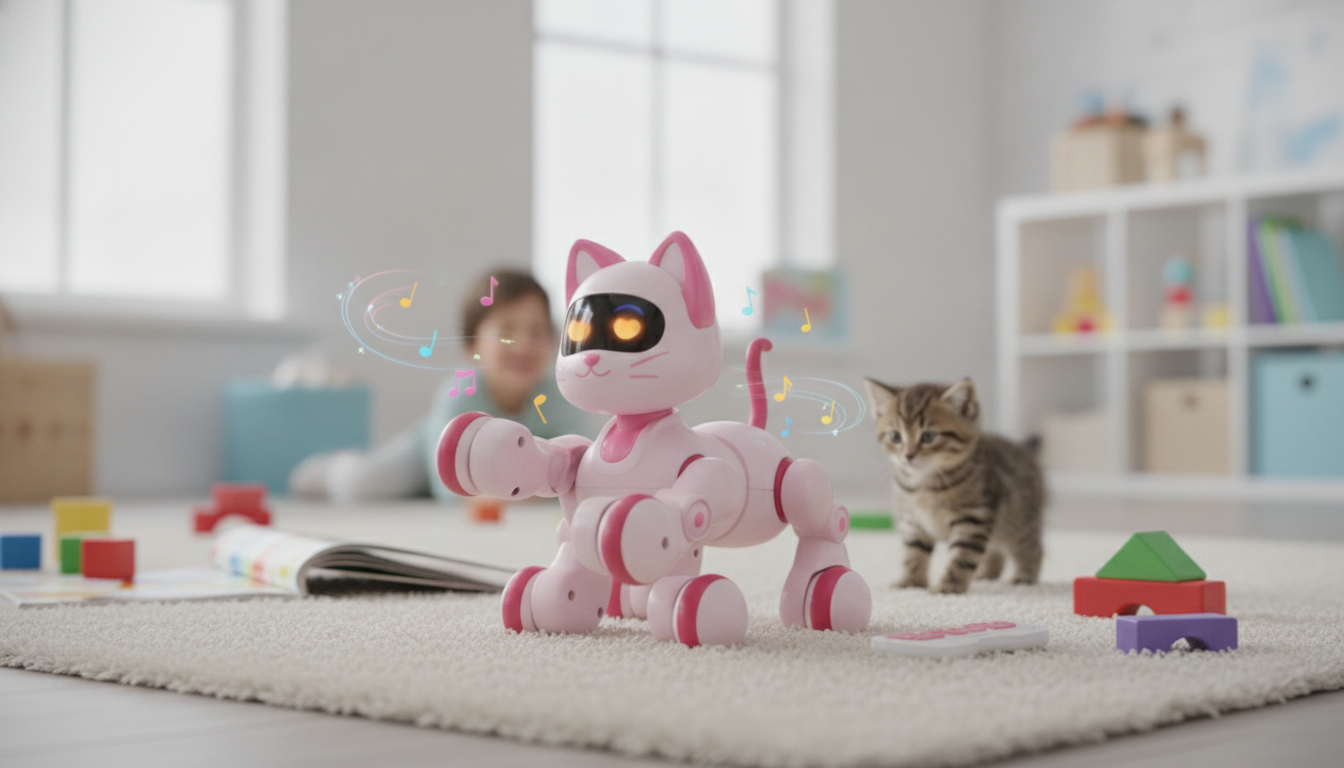
Intelligent RC Robot Cat with Voice Command, Dance & Music – Interactive Toy for Kids
This interactive robot cat brings movement, sound, and responsive play together in a kid-friendly companion. With voice-command features, remote-control actions, and built-in music and dance modes, it’s designed to keep playtime active, imaginative, and engaging—whether used for solo play, family games, or simple learning-by-doing routines.
What makes this robot cat fun to play with
A robot pet is most exciting when it feels responsive, a little surprising, and easy to “direct.” This robot cat leans into that with a mix of voice interaction, RC control, and quick-hit entertainment modes.
- Responds to voice prompts and remote inputs for more varied play than a basic push-toy.
- Dance and music modes add novelty for quick “showtime” moments and group play.
- Interactive behavior encourages imaginative caregiving and pet-style roleplay without the upkeep of a real pet.
- Great for short bursts of movement-based play (following, guiding, and directing actions).
For families who want a toy that feels “alive” without turning playtime into more screen time, the mix of sound + movement can keep kids engaged while still getting them up and moving around the room.
Key features to look for during playtime
The best play sessions usually start simple, then build into little routines. Here are practical ways to get the most out of voice command, remote control, and music/dance features.
- Voice control: try simple, repeatable commands in a quiet room first to help kids learn the pattern.
- RC control: helps kids practice directional control (forward/back/turn) and cause-and-effect thinking.
- Music and dance: useful as a reward mode after a few minutes of guided play or cleanup routines.
- Interactive routines: combine voice + RC to create mini “training sessions” like a real pet.
- Kid-friendly handling: lightweight design is easier for small hands to carry and reposition.
Quick feature checklist for family use
| Feature | Why it matters | Best for |
|---|---|---|
| Voice command control | Adds hands-free interaction and keeps play feeling “alive” | Kids who enjoy talking to toys and roleplay |
| Remote control driving | Builds coordination and confidence through repeatable actions | Ages practicing fine motor skills |
| Dance & music modes | Instant fun and social play (show-and-tell, parties, siblings) | Group play and quick entertainment |
| Interactive pet-style behavior | Encourages empathy and imaginative caregiving play | Kids who love animals but can’t have a pet |
Who this toy is a good fit for
This kind of robot pet tends to shine in households where kids like to narrate play, assign roles, and create mini “missions.” It also works well when families want an activity that feels modern without relying on apps or video content.
- Kids who love pets, pretend play, and interactive companions.
- Families seeking a screen-free activity that still feels “high-tech.”
- Gift occasions where instant, out-of-the-box fun matters (birthdays, holidays, rewards).
- Playdates and siblings—music/dance features can turn into collaborative games.
- Parents who prefer toys that invite movement and interaction rather than passive watching.
Simple games and routines kids can try
Structured games help kids stay engaged longer, especially once the “new toy excitement” wears off. These easy ideas work with both solo play and small groups.
- “Command and follow”: one person gives voice commands while another uses the remote to guide a mini obstacle course.
- “Dance battle”: take turns triggering dance/music mode, then copy the moves.
- “Pet care pretend”: assign roles (vet, trainer, owner) and create a daily routine story.
- “Treasure escort”: guide the robot cat to “deliver” a small lightweight item to a target spot.
- “Quiet-time mode”: set a short music routine as a transition cue before reading or bedtime.
A helpful trick is to rotate roles: “trainer” gives commands, “driver” handles the remote, and “judge” scores how well the cat completed the routine. That turn-taking element can reduce squabbles during shared play.
Safety and setup considerations
A few simple habits can make interactive toys smoother (and safer) to use—especially with younger siblings around.
For additional general toy-safety guidance, consult the Consumer Product Safety Commission (CPSC) toy safety resources and the American Academy of Pediatrics guidance on choosing safe toys. If you want to dive into the industry standard used by many manufacturers, see ASTM F963 (Toy Safety Specification).
Product at a glance
- Name: Intelligent RC Robot Cat with Voice Command, Dance & Music
- Price: $32.67 (USD)
- Availability: In stock
- Best use: interactive, movement-based play with voice and remote control options
Purchase details
| Item | Details |
|---|---|
| Product page | View the robot cat |
| Price | 32.67 USD |
| Stock status | in_stock |
More in-stock picks to round out playtime
- Calvin Klein Women’s Spring/Summer Backpack (handy for carrying toys, snacks, and travel essentials).
- New Balance 1906R Light Blue Leather Sneakers (a comfortable option for active days and on-the-go play).
FAQ
What ages is an interactive robot cat best for?
Many interactive RC-style toys are a great match for kids who can follow simple instructions and practice basic directional control, often around ages 4+ or 5+. Younger children may still enjoy it with close supervision, especially when batteries and small parts are involved.
Does voice control work in a noisy room?
Voice control typically works best in quieter spaces where the toy can clearly “hear” the command. For smoother results, use short, consistent phrases and lower background noise like TV or music.
How can this toy support learning during play?
It can reinforce cause-and-effect (pressing buttons and seeing a response), sequencing (giving commands in order), and motor coordination (steering with the remote). Group play also builds turn-taking and communication, while pretend-pet stories encourage creativity and empathy.
Recommended for you

Was this article helpful?
Yes
No








Leave a comment